 RefraCard

The paper is the weakest part of the visit
A prescription is the durable output of an eye examination — the part with clinical value years later. It is handed over on a slip of paper, at the end of an appointment, to someone mostly thinking about frames. Most of them will not be able to find it in eighteen months, and neither will the next practice they walk into.
That is a poor outcome for the patient and a lost thread for you: the history that made you useful to them stays in your practice management system, invisible to them and to everyone who sees them next.
What issuing into RefraCard changes
A verified prescription from your centre, dated and permanent, sitting alongside every other one they have ever had — readable in plain language, shareable in seconds, and impossible to lose in a drawer.
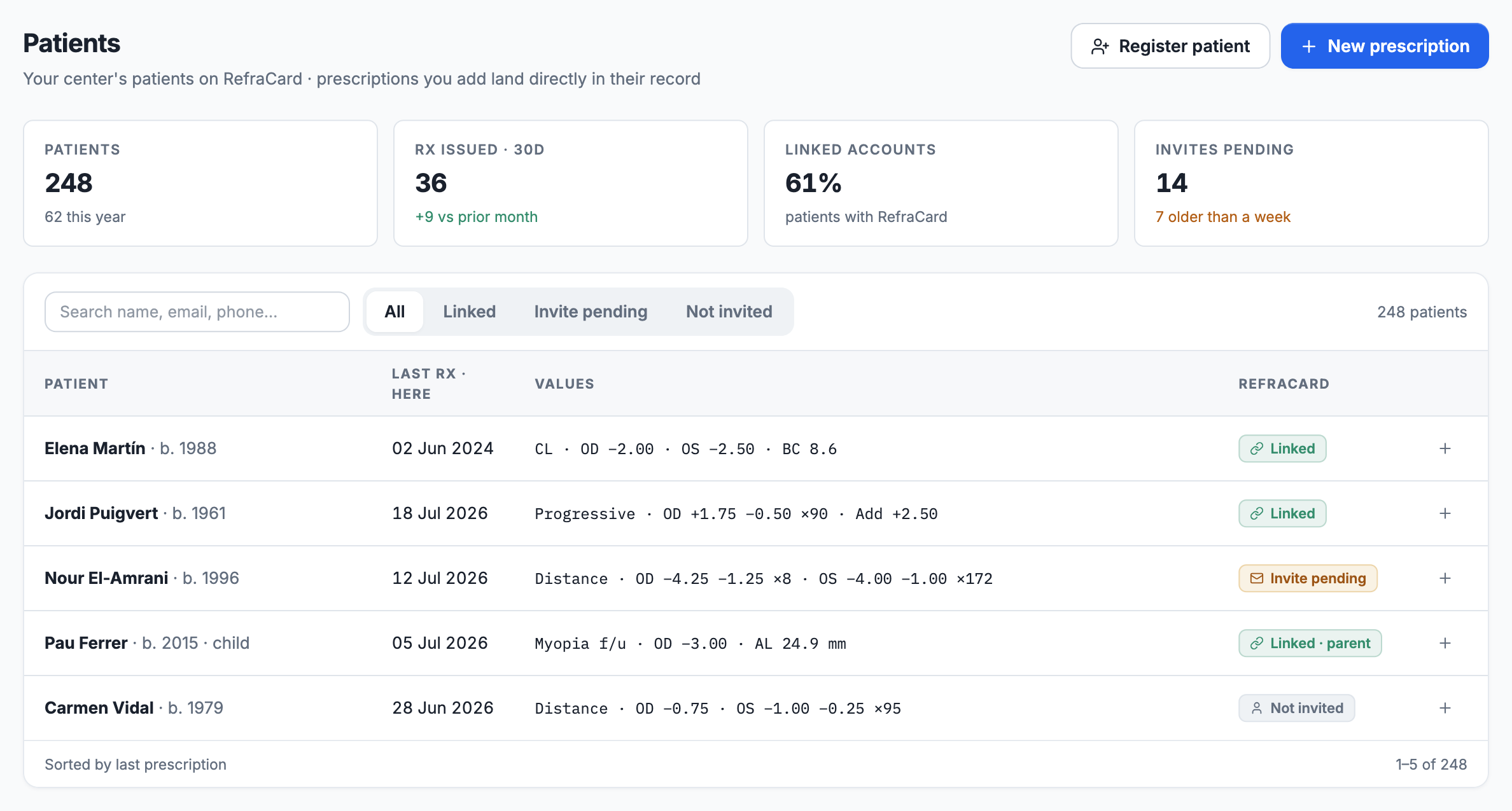
You stay attached to the record you created. Their history-with-you is visible to them, re-examination reminders arrive with your name on them, and your centre is present at the moment they next think about their eyes.
Whoever sees them next gets the trajectory rather than a single measurement — which is the difference between "this is your prescription" and "this is how your eyes have changed".

What it looks like at the counter
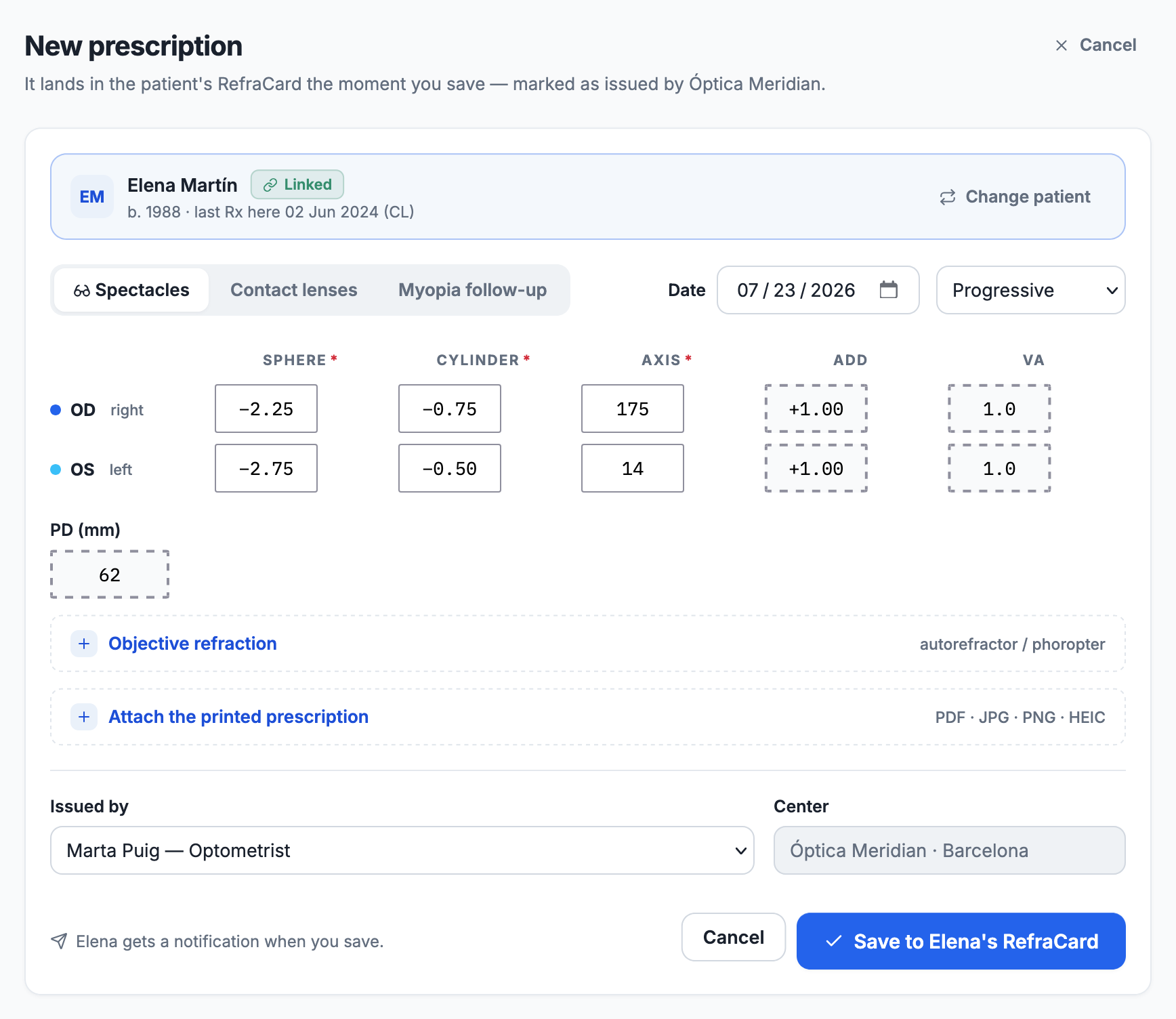
- Enter the prescription once, in the staff workspace, as you already do
- Attach the original — a photo of the paper or the PDF — to the same entry
- The customer receives it in their RefraCard, attributed to your centre
- Old prescriptions can be backdated, so a long-standing customer's history goes in too
Who it suits
Independent optical centres and small chains who compete on continuity of care rather than on price, clinics running myopia management programmes where progression data is the whole point, and practices that already keep meticulous records and would rather their patients could see them.