 RefraCard
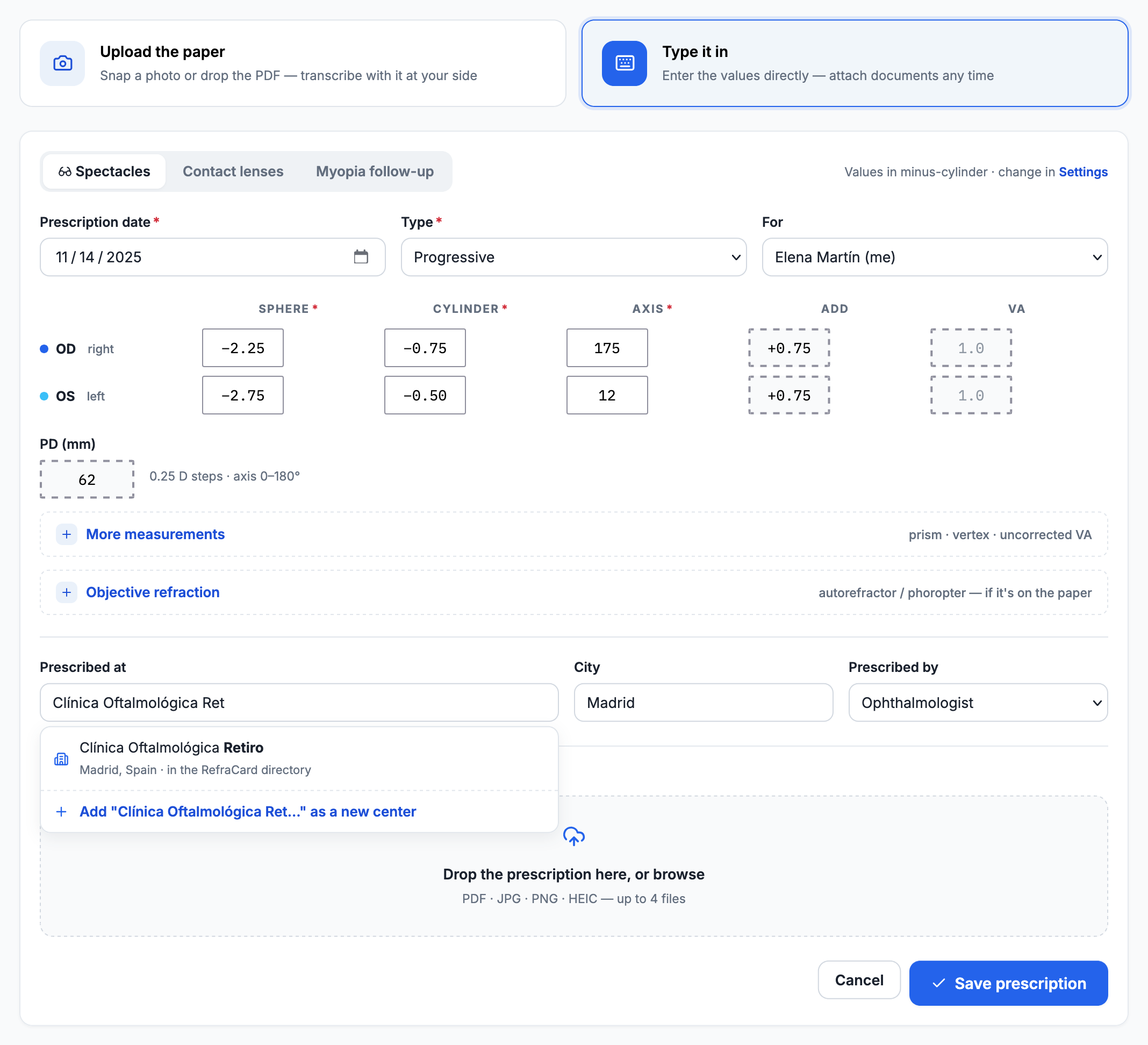
Add a prescription
Photograph the paper and transcribe it with the image beside you, or just type the values straight in. It is one short form: sphere, cylinder, axis and — when they are on your paper — add, PD and prism, per eye.
- Old prescriptions are welcome. Backdate freely. A 2014 entry is as useful as today's — often more, because it is where your curve starts.
- The document stays attached. The photo or PDF you uploaded is kept with the entry, so the original is always one tap away.
- Record who issued it. The optic center or clinic is part of the entry, which is what lets you go back and ask for a copy years later.
We keep it, and chart it
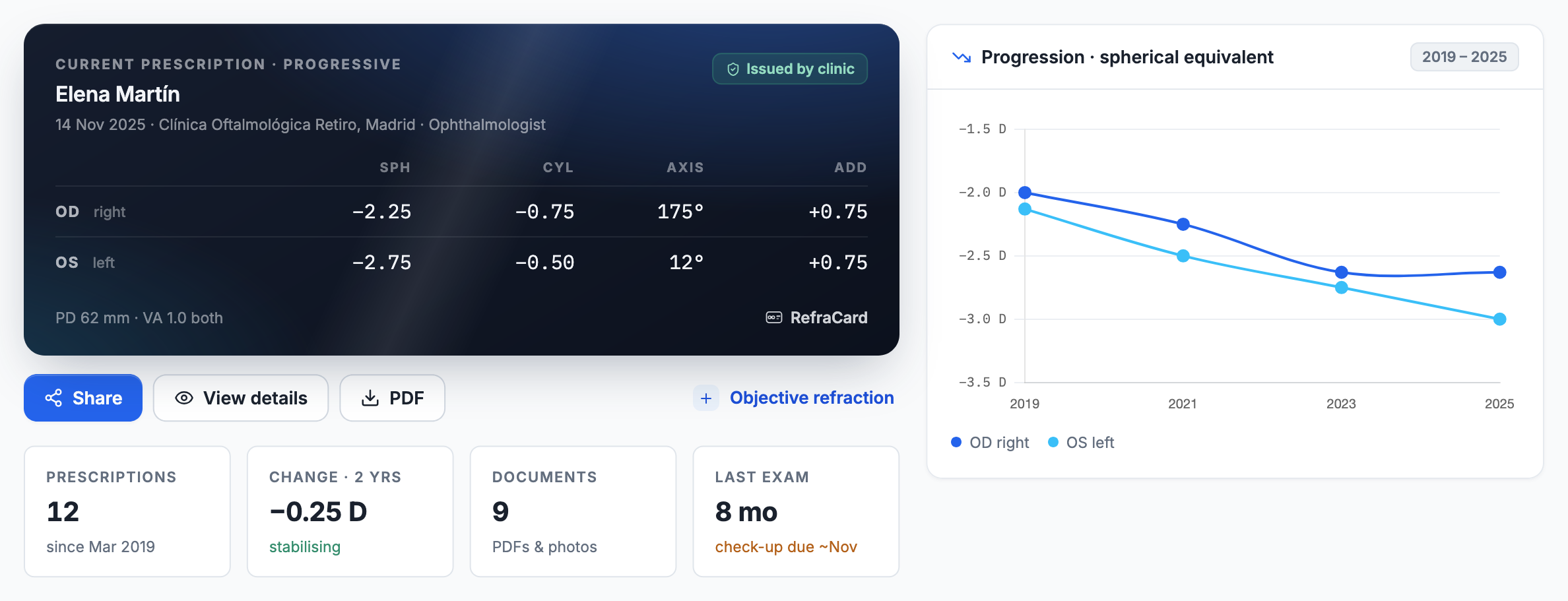
Entries stack up into a history, and the history draws itself. Sphere, cylinder and axis per eye over time — so stability looks like stability and a change looks like a change, instead of both looking like a number on a slip of paper.
Use it anywhere
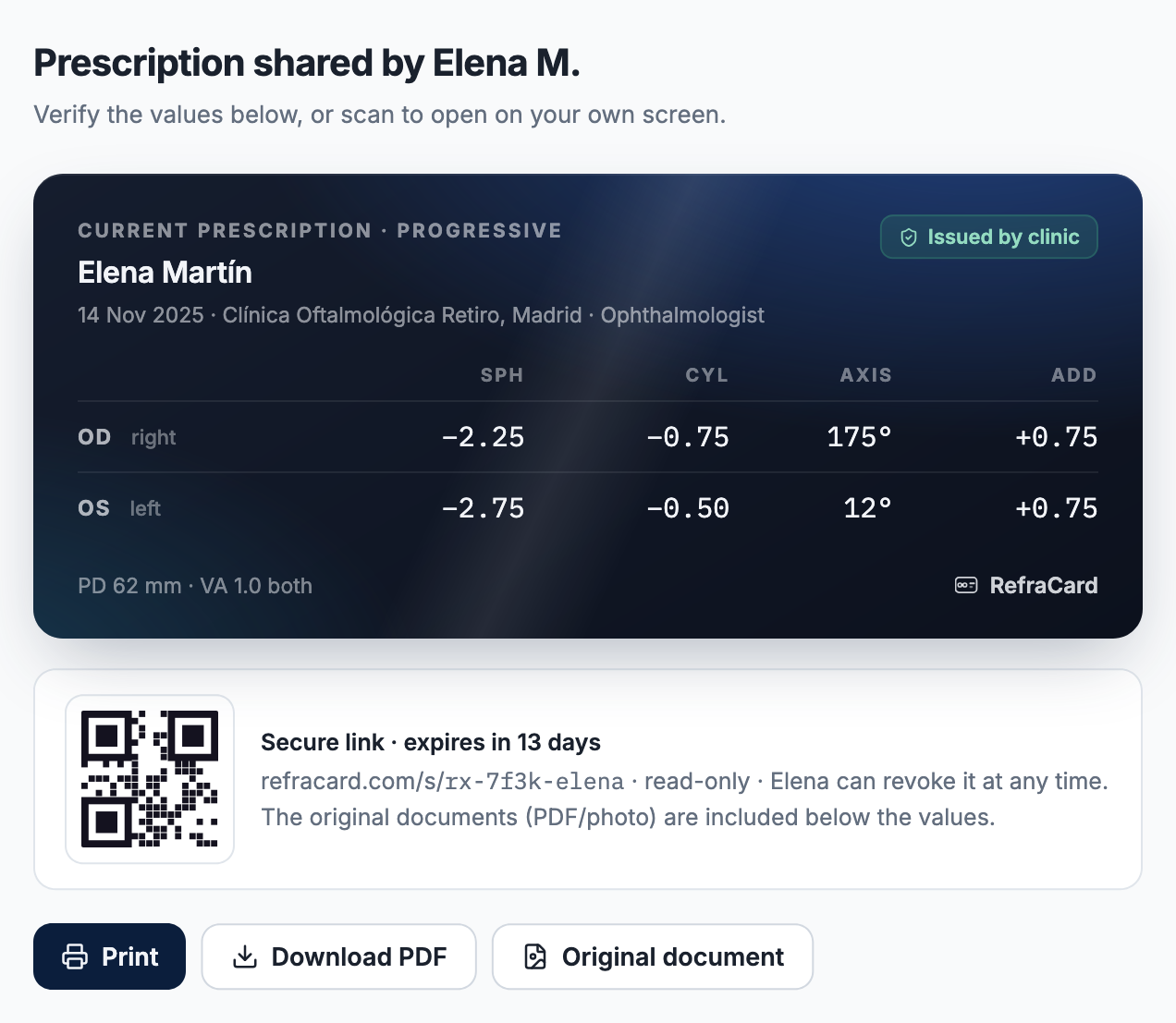
The point of holding the record is being able to produce it — at a counter abroad, at a new optician, at an appointment you booked this morning.
- Show a QR. Your current prescription opens on their screen in seconds. Nothing to print, nothing to find.
- Download a clean PDF when a shop wants a document rather than a screen.
- Let your optic center write to it. If they use RefraCard, new prescriptions arrive in your card verified — issued by them, not typed by you.
Common questions
The things people ask before they start.
Is it really free?
For people, yes — free forever, for your whole family. RefraCard is paid for by the optic centers and clinics who use the professional side.
What if I only have one old prescription?
Start with it. One entry already solves the “where is that paper” problem, and every visit from now on adds a point to the curve.
Do I need my optician to take part?
No. You can build the whole record yourself from paper prescriptions. If your optic center does use RefraCard, their entries simply arrive already verified.
Can I get my prescription out again?
Always. Export the full history as PDF or data at any time — it is your record, and it stays portable.
What about contact lenses?
They are kept as their own entries, because a contact-lens prescription is not the same as a glasses one — here is why.