 RefraCard

Why anyone bothers slowing it down
Glasses correct myopia perfectly well at any strength, so it is fair to ask what the fuss is about. The answer is that myopia is not only a focusing error — it is an eye that has grown too long front to back. That extra length stretches the retina, and the stretching is permanent. It does not un-stretch when the glasses go on.
Risk rises with length, continuously and for life. Compared with a non-myopic eye, a high myope's risk of retinal detachment, myopic maculopathy, glaucoma and early cataract is many times higher — and those risks are not reduced by wearing a correct prescription, nor by laser surgery, which reshapes the cornea and leaves the length untouched.
So the goal of myopia control is not sharper vision this year. It is fewer dioptres and a shorter eye at the end of childhood, because that is the number the next sixty years are built on. A treatment that removes one dioptre of final myopia is meaningful even though the child still wears glasses.
Axial length is the real measurement
The prescription is what you get on paper; axial length — the front-to-back size of the eye, in millimetres, measured with an optical biometer — is what clinicians managing myopia actually watch. It is more precise than refraction, it is not affected by how well a tired child answers "better one, or two?", and it maps directly onto the risk above.

Rough orientation: an adult non-myopic eye is around 23–24 mm. Roughly every extra millimetre corresponds to about 2.5 dioptres of myopia. Eyes beyond about 26 mm are where risk climbs steeply. Some growth in a growing child is normal — the question is always whether this child is growing faster than expected for their age.
What actually slows progression
These are the options with real clinical-trial evidence behind them. Availability, brand names and licensing differ by country, and suitability is individual — age, current prescription, rate of change, lifestyle and how reliably a child manages lenses all matter.
None of them is a cure, and none of them removes the glasses. What they change is the rate: how much myopia a child finishes childhood with, and therefore how long their eye ends up. That is the number the next sixty years are built on.
A very dilute drop (commonly 0.01%–0.05%) at bedtime. Among the most studied approaches; higher concentrations slow progression more but bring light sensitivity and near-focus blur, and rebound after stopping is a known issue. Often combined with optical treatment. Prescription-only.
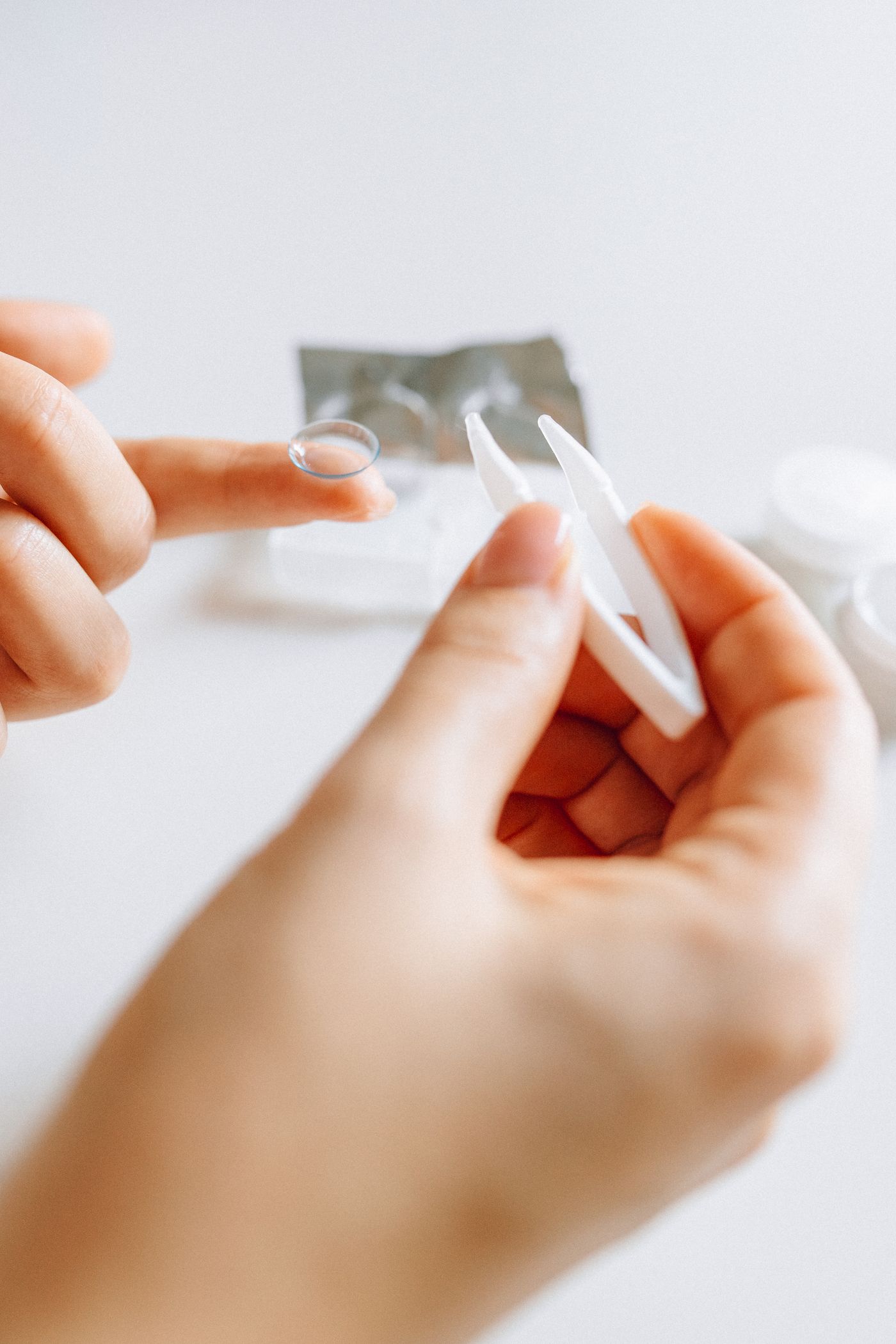
Daily disposable lenses designed for myopia control (MiSight is the best known licensed example). Clear central vision plus concentric treatment zones that put peripheral light in front of the retina — the signal that appears to slow elongation. Suits children who can manage daily lenses.
Rigid lenses worn overnight that temporarily reshape the cornea, so the day is spent without glasses or lenses. Effective, and popular with sporty children for that reason. Demands scrupulous hygiene — the main risk is microbial keratitis — and close professional follow-up.
Spectacle lenses with hundreds of tiny treatment segments around a clear centre — sold as DIMS (defocus incorporated multiple segments) or HAL (highly aspherical lenslets). The lowest-friction option, since the child just wears glasses, and the fastest-growing category.
Around two hours a day outdoors is consistently associated with delaying the onset of myopia in children who do not yet have it. Its effect on slowing progression once myopia has started is weaker — but it is free, has no downside, and is the one thing worth doing for every child, treated or not.
Under-correcting a child's glasses to "give the eyes less to do" is an old idea that has been tested and does not work; some studies found it made progression slightly worse. A myopic child should be fully corrected.
How progress is followed
A programme is a series of comparisons
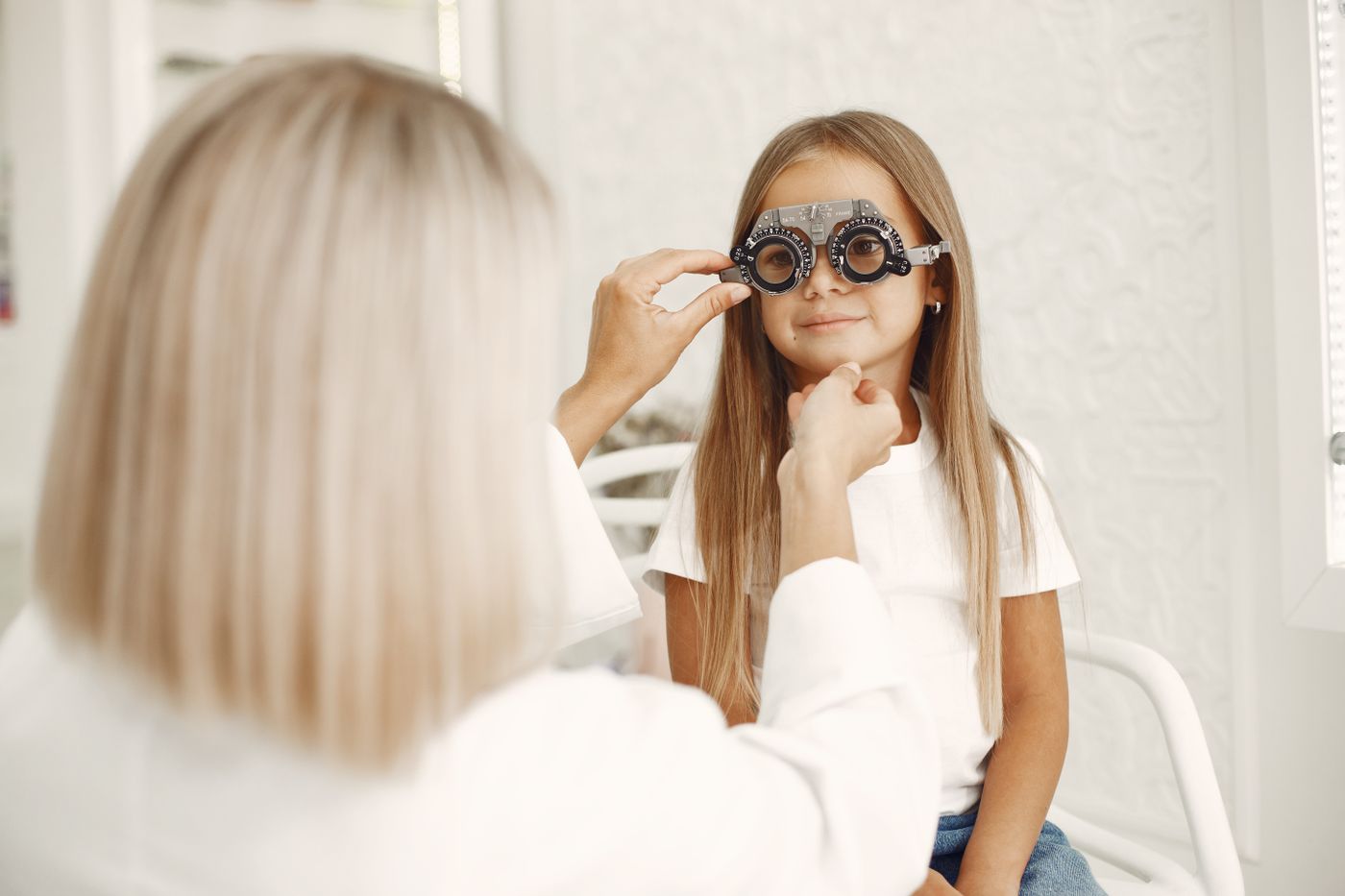
A myopia-management appointment is not really about the result on the day. It exists so that this visit can be measured against the last one — and each visit is only worth what there is to compare it against.
A typical record looks like the table below.
| Visit | Age | SPH (OD/OS) | Axial length | Note |
|---|---|---|---|---|
| Mar 2023 | 8 | −1.00 / −0.75 | 23.4 / 23.3 mm | Baseline |
| Mar 2024 | 9 | −1.75 / −1.50 | 23.8 / 23.7 mm | −0.75 D/yr — treatment started |
| Mar 2025 | 10 | −2.00 / −1.75 | 23.9 / 23.8 mm | Slowed to −0.25 D/yr |
Refraction for these visits is usually measured under cycloplegia — drops that relax focusing — because a child's own focusing muscle can otherwise hide or exaggerate the result. Reviews are commonly every six to twelve months while the eye is still growing.
Read across that table and the decision is obvious. Read any single row and it is invisible. That is the entire problem this record exists to solve: the rows are usually scattered across different practices, different years and sometimes different countries, and the parent is the only person who ever holds all of them.
When it stops
Progression usually slows through the late teens and settles in the early twenties, though it can continue longer — particularly in high myopia. Treatment is typically continued until the rate has genuinely levelled off, then stopped with follow-up, since stopping too early can be followed by a period of catch-up growth. After that the prescription is stable, but the longer eye remains longer for life, which is why regular retinal checks continue to matter for high myopes long after the glasses stop changing.
Keeping the record
Every decision above is a comparison over time, and the data has a habit of dispersing — a first pair from one optician, school-screening results from another, a hospital biometry printout in a drawer. RefraCard keeps a child's prescriptions in one place from the very first pair, with the documents attached and, where you have it, axial length recorded alongside — so the progression curve is there when someone finally needs to read it.