 RefraCard

THE ANATOMY OF A PRESCRIPTION
| SPH | CYL | AXIS | ADD | |
|---|---|---|---|---|
| OD | −2.25 | −0.75 | 175 | +0.75 |
| OS | −2.75 | −0.50 | 12 | +0.75 |
Decode your own prescription
Type the values from your paper. We translate them into plain language — free, instant, nothing stored.
| Sphere (SPH) | Cylinder (CYL) | Axis | Add | |
|---|---|---|---|---|
| ODright | ||||
| OSleft |
OD and OS — which eye is which
OD (oculus dexter) is your right eye; OS (oculus sinister, sometimes OI in Spanish) is your left. They're almost never identical — and how the difference evolves over the years is one of the most useful things a lifelong record shows. The full OD / OS / OU guide →
The five numbers
The main power of the lens, in diopters. A minus number corrects short-sightedness (myopia): distance is blurry, near is sharp. A plus number corrects long-sightedness (hyperopia). The further from zero, the stronger the lens. What SPH means →
Your astigmatism: the front of the eye is slightly oval instead of round, so it focuses unevenly. Most people have a little. Under about −0.75 it's mild; beyond −1.50 uncorrected lines can look stretched or doubled. What CYL means →
The direction, from 1° to 180°, along which the cylinder correction is placed. It's a position, not a strength — an axis of 175° isn't "more" than 12°, just differently oriented. What AXIS means →
Extra plus power for close work, used in reading, bifocal and progressive lenses. It appears when presbyopia arrives — the normal stiffening of the eye's focusing lens, typically from the mid-forties. What ADD means →
The distance between your pupils in millimetres. Labs need it to center the lenses in front of your eyes. It's often missing from the paper — worth asking for and keeping in your record. What PD means →
On a minority of prescriptions, correcting where the eyes point rather than how sharply they focus. Written as an amount in prism dioptres plus a base direction (BI, BO, BU, BD). What prism means →
Prescription vs refraction
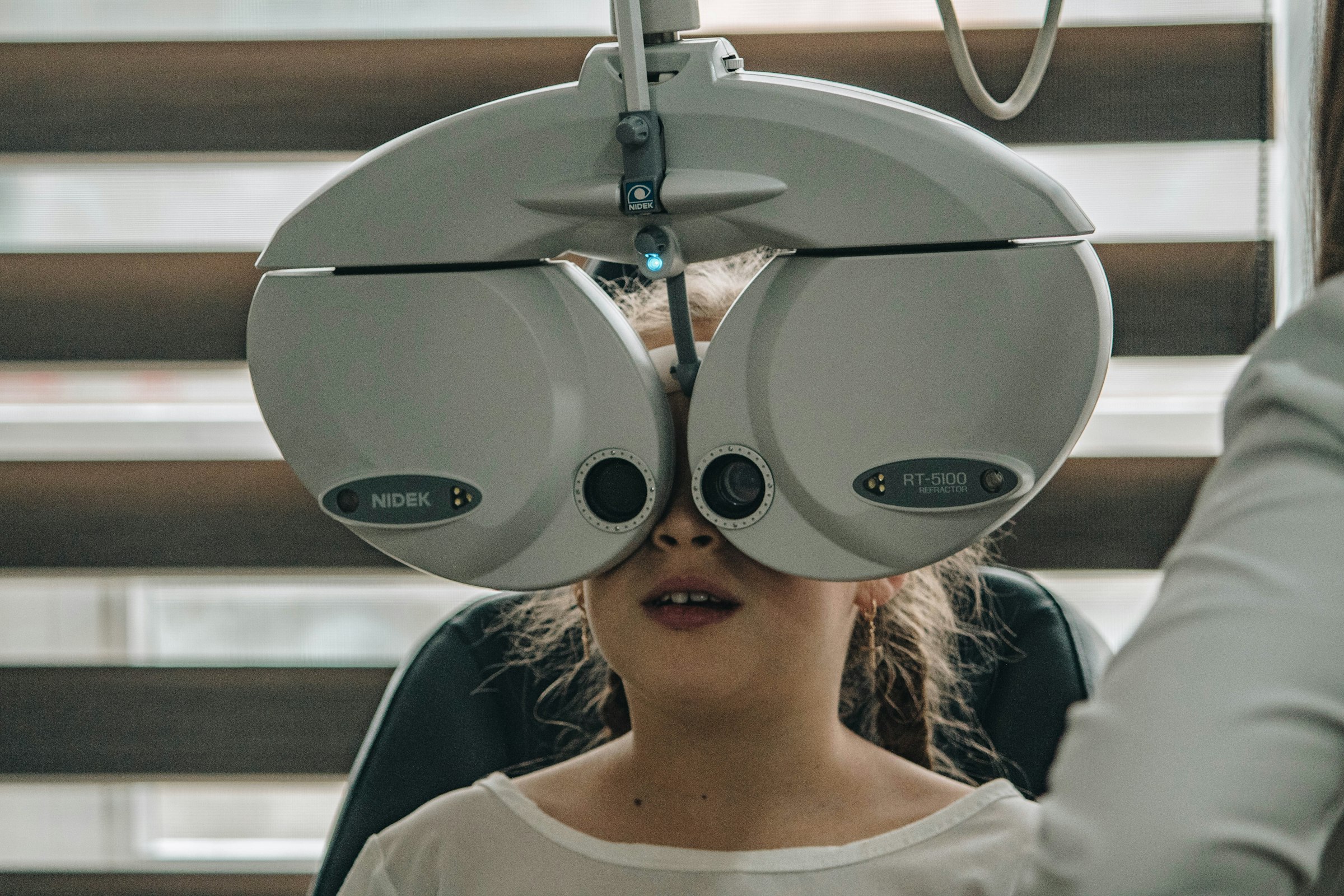
The machine's measurement (the objective refraction) and what you're actually prescribed can legitimately differ — clinicians often soften a correction for comfort and adaptation. That's why your RefraCard keeps both, when you have them: the prescription up front, the objective refraction one tap behind it.
Why keep the history

One prescription is a snapshot. Ten are a story.
Whether your myopia is stable or creeping, when presbyopia arrived, whether your astigmatism axis is drifting — the context every new optometrist wishes they had, and, for children, the progression curve that myopia management decisions depend on.
So the paper from a shop that closed in 2019 is still there when someone finally asks what your eyes were doing back then.
What the conditions mean
The words your prescription implies but never prints — what each one actually is, and which of them are worth watching over time.
Practical questions
The things people actually search for at the moment they need the paper and cannot find it.